
Reviewed · SNOWSHOEING TOURS
Explore Winter Woods: Snowshoe walk with local Biologist
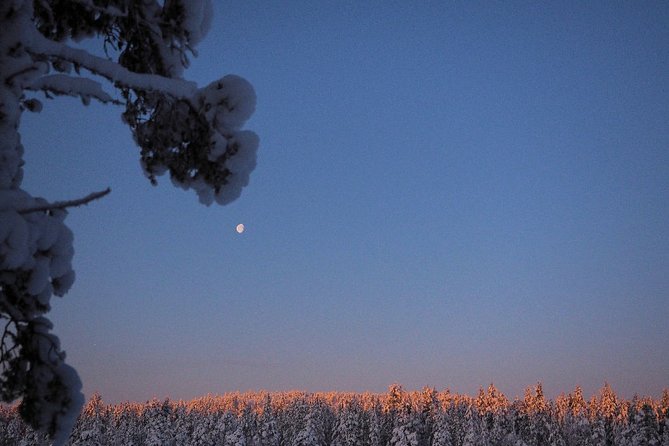
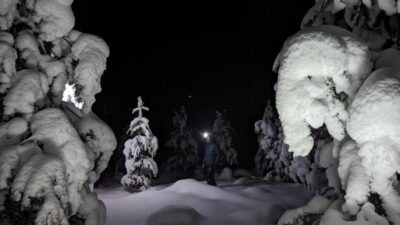
The best part of this small-group snowshoe walk is its quiet focus on Arctic nature. Rather than racing from one photo stop to the next, you enter old Lapland woods with Terhi, a local biologist, and learn how to read tracks, trees, birds, and winter conditions.
I like the personal scale, with no more than six people, and I like the warm finish in a traditional kota, where coffee or tea, homemade treats, and local snacks are served beside an open fire. The main thing to consider is that wildlife sightings are never promised, and deep snow or poor weather can make the walk more demanding.
Key points to know
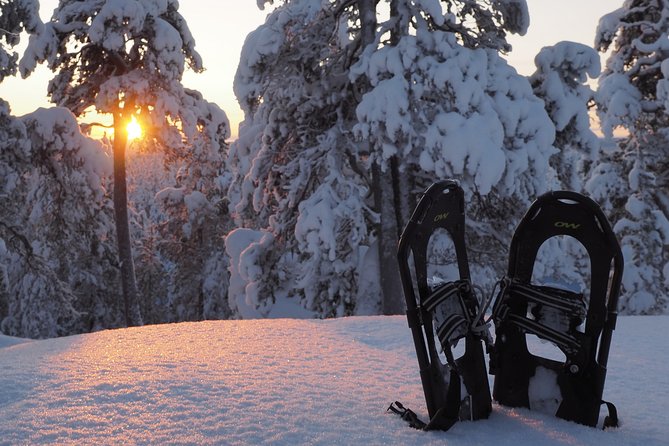
- Ancient forest setting: Walk among some of Lapland’s oldest woods, beside lakes and mystic mires.
- Local biology lesson: Terhi explains plants, trees, vegetation, Arctic animals, and signs left in the snow.
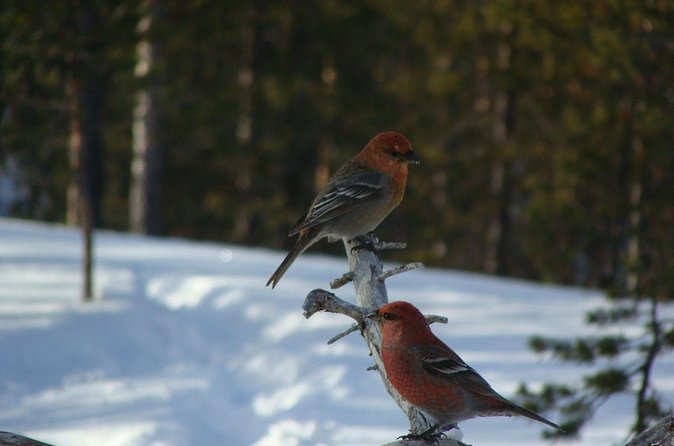
- Birdwatching along the way: Siberian Jays and Siberian Tits are common possibilities, with Pine Grosbeaks returning from mid-February or early March.
- Very small group: The experience is limited to six people, allowing time for questions and a relaxed pace.
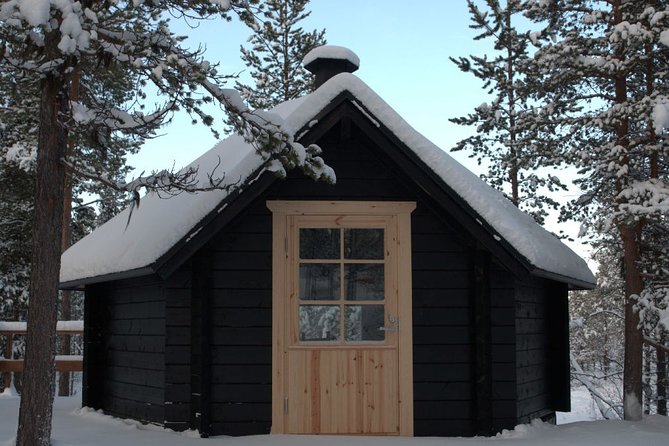
- Open-fire finish: Warm up in a kota with hot drinks and local snacks, sometimes including homemade baked goods and local produce.
- Good trip opener: The walk can help you understand the nature you will see around Inari during the rest of your holiday.
A thoughtful way to meet Lapland’s winter woods
Many winter activities around Inari promise speed, spectacle, or a chase for the northern lights. This one takes a slower route. You put on snowshoes and walk into an old forest where the details matter: a line of tracks, a bird moving between branches, or the shape of a snow-covered tree.
That change of pace is the point. You are not simply being taken into the forest. You are being shown how to notice it.
Terhi and Arto run AT Nature, and their approach is personal. Terhi brings a strong understanding of local flora and fauna, while Arto adds insight into Arctic life, bushcraft, Sami culture, and the practical side of living in northern Finland. The result feels closer to a visit with local hosts than to a large commercial outing.
The activity lasts about two and a half hours and starts at 10:00 in the morning. That timing gives you useful daylight without taking up your whole day in Inari. It also leaves room for another activity later, though you should remember that winter walking can take more energy than the clock suggests.
More snowshoe walks around Lapland:
- Scenic Snowshoeing on the Top of Pyhä Fell
★ 5.0 · 10 reviews - Premium Snowshoeing in Pyhä-Luosto National Park
★ 4.5 · 6 reviews - Snowshoe experience with traditional beverages in Lapland
★ 4.9 · 6 reviews
Setting out from Terstontie 123
The meeting point is Terstontie 123, 99870 Inari. The walk ends back at the same meeting point, and the drive back toward Inari is part of the overall experience.
The forest is described as one of the oldest in Lapland. You move through woods near lakes and mires, with the snow changing the feel of everything around you. The forest is quieter in winter, and the snow gives you a useful record of animal movement.
This is not a manicured park walk. The setting is wild, and that gives the outing its value. You may spend several minutes studying a single track or listening for birds rather than covering a great distance.
That also means you should not judge the experience by how many animals you see. Snowfall, wind, temperature, and the behavior of wildlife all affect the day. One outing may bring clear tracks and active birds. Another may offer little visible wildlife but still give you a peaceful walk through a remarkable forest.
Learning to read snow, trees, and tracks
The walk is built around interpretation. Terhi can help you identify signs from animals such as red fox and hare, making later hikes more interesting. Once you know what to look for, a snowy trail stops being a blank white surface.
You might notice how a track changes direction, where an animal has paused, or how feeding areas appear near the trees. These small details are easy to miss without a guide who knows the place well.
Plant life and forest structure also receive attention. You learn about local trees, vegetation, and how Arctic species cope with a short growing season and long winters. The conversation can also touch on climate change and its effect on northern environments. That gives the walk more weight than a simple outing for photographs.
Terhi’s English is described as excellent, which matters on a tour built around explanation. You can ask questions as you go, and the small group size means you are not trying to hear a lecture from the back of a crowd.
Birds of the Inari forest
Birdlife is one of the more realistic highlights of this experience. Siberian Jays and Siberian Tits are commonly found in the area, and you may spot them near the feeding place by the kota.
Birdwatching here is not a staged show. You need patience, quiet, and a little luck. The forest may reward you with movement in the branches, though you should not expect a long list of species in a short winter walk.
The timing of your visit can change what you look for. From mid-February or early March, the first Pine Grosbeaks begin returning. If birds are important to you, that seasonal detail may help you choose your dates.
You might also see an elk or a mountain hare. These are possibilities, not guarantees. The guide can explain the animals and their signs even when the animals themselves remain out of sight.
A few more Lapland days to weigh up
- Rovaniemi: Sauna & Ice Swimming Tour with Dinner and Aurora
★ 4.8 · 150 reviews - Guided Ice Climbing Activity in Pyhä
★ 5.0 · 149 reviews - Northern lights tour to Lake Inari from Ivalo, Reindeers & Dinner
★ 4.5 · 63 reviews - Northern Lights Auroras from Kemi-Tornio with Pickup
★ 4.5 · 44 reviews
Snowshoes, boots, and the physical side
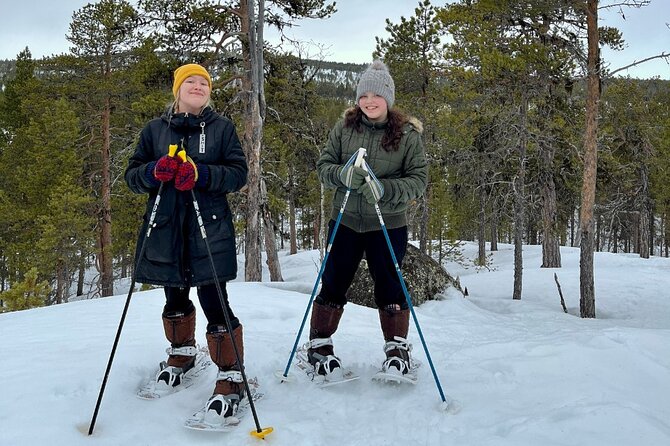
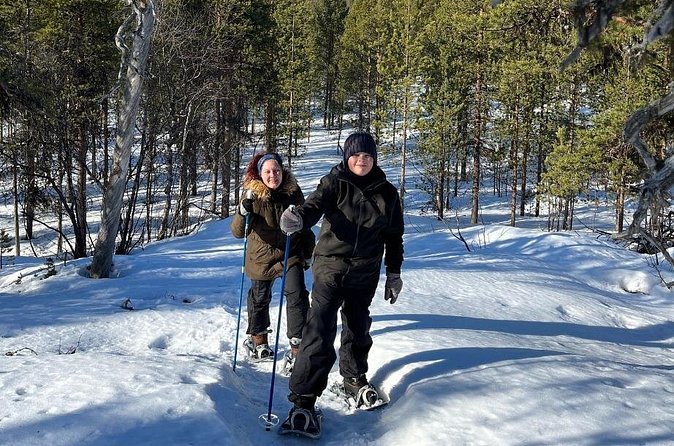
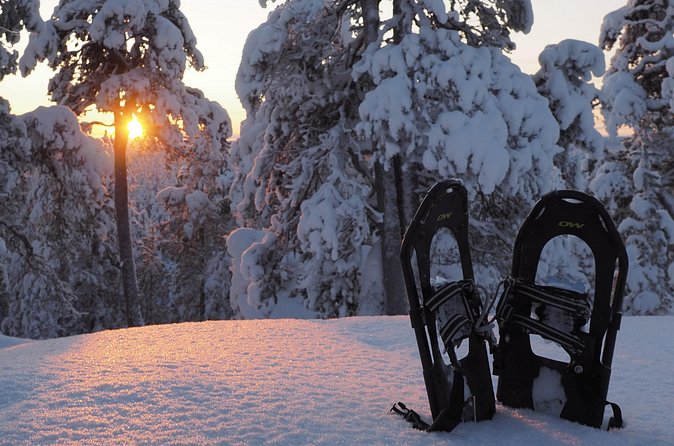
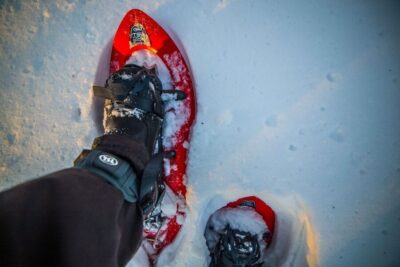
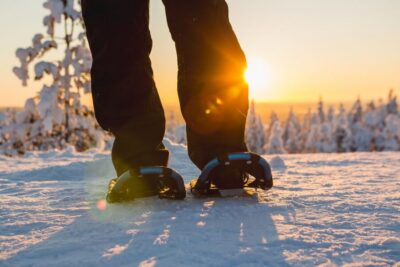
Snowshoes make it possible to move across deep winter snow that would be awkward or exhausting in ordinary footwear. The hosts provide snowshoes and boots, and one detailed account describes the equipment being fitted carefully.
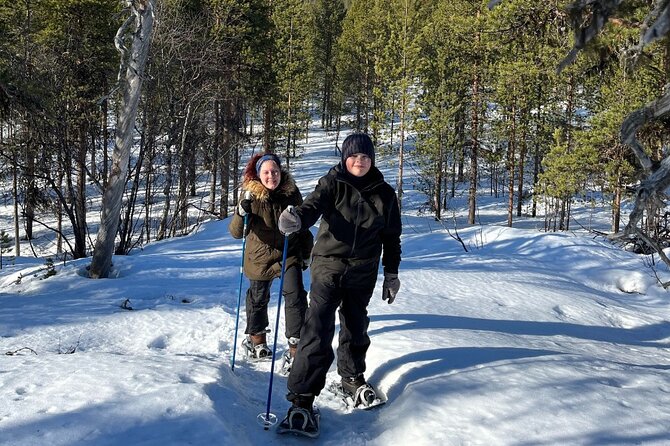
Still, snowshoeing is physical. You lift your feet higher than on a normal walk, and uneven snow can make the pace slower. You should be comfortable spending time outdoors in Arctic winter conditions and walking through a natural forest rather than along a cleared urban path.
The experience is suitable for most people, but one family found that an 11-year-old enjoyed it while very young children might struggle with the required attention span. That is a useful guide for parents. The issue is not only fitness. A child needs to stay engaged while listening, watching for tracks, and moving in snow.
The small group helps here. With a maximum of six people, the pace can be more flexible than on a large group excursion. You can ask for clarification, stop to look at something, and avoid feeling lost in a line of snowshoers.
The kota and the open-fire break
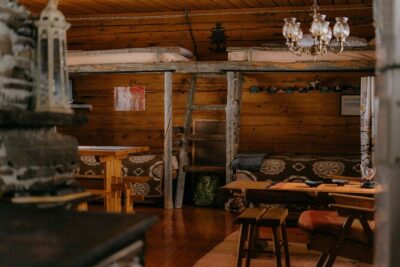
The walk ends with one of the experience’s strongest features: time in a kota, a traditional Finnish fire hut, with an open fire and hot drinks.
Coffee and tea are served with local snacks. The food described in the experience includes homemade baked goods, a bun, muffins, cheese, and a toasted snack with moose. The exact offering may vary, but the idea is consistent: this is a warm, simple meal connected to the place rather than a generic packaged refreshment.
After cold air and snow, the fire hut changes the rhythm of the day. You can thaw your hands, talk with Terhi and Arto, and watch birds near the feeding area. The hospitality is a major part of what makes the outing feel personal.
The kota is also a good setting for questions that do not fit neatly into the forest walk. You can ask about local life, Arctic animals, Sami culture, or how people manage daily routines in northern Finland. Arto may also explain aspects of the northern lights during the return drive, although this is not presented as an aurora tour.
Why the six-person limit matters
A maximum of six people is more than a marketing detail. It changes the quality of the walk.
On a large excursion, the guide often has to keep moving and repeat information for the whole group. Here, the format allows a more natural conversation. You can stop for a track without holding up a long line, and the guide can adjust explanations to the interests of the group.
This is especially useful if you care about plants, birds, local culture, or environmental change. It is also helpful for first-time snowshoers who may need a little more guidance with the equipment and pace.
The tradeoff is that small tours can have limited availability. The experience is often booked about 25 days ahead, so waiting until the last moment may leave you without a place. If this is important to your Inari plans, reserve before your trip rather than hoping to find a spare spot.
Is the $114.02 price fair?
At $114.02 per person, this is not the cheapest way to spend a morning in Lapland. The value depends on what you want from a winter activity.
You are paying for roughly two and a half hours, snowshoes and boots, a local guide with a biology background, a group capped at six, and hot drinks with local food in a private-feeling wilderness hut. The price also covers access to a natural setting that would be harder to understand on your own.
I think the cost makes the most sense for you if you want more than a photo opportunity. The walk gives you skills you can use afterward, especially identifying tracks and noticing birds and vegetation. It can also shape how you see the rest of your visit around Inari.
If you only want fast action, guaranteed animal sightings, or a long snowmobile-style adventure, this may feel expensive for the time. The attraction is the guide, the setting, and the conversation, not speed or spectacle.
The best time to fit it into your trip
I especially like this as an early activity in your Lapland visit. Learning the names and habits of local plants and animals at the start can help you make sense of the woods and snow during later outings.
It also works well near the end of a holiday if you prefer a quieter final day. The fire, food, and conversation provide a gentle close to a busy week of Arctic activities.
Morning conditions can vary. Snow and poor weather may affect the experience, and the activity can be canceled if conditions are not suitable. If that happens, you are offered another date or a full refund.
You can cancel for a full refund up to 24 hours before the 10:00 start time. Changes or cancellations made less than 24 hours before the start are not accepted for a refund. The activity also requires a minimum number of participants, so a low booking count can lead to a new date, another experience, or a refund.
Who should book this snowshoe walk?
I would choose this for you if you enjoy nature, local stories, and a slower outdoor experience. It suits independent visitors who want to support a small local company and families with older children who can focus for the duration of the walk.
It is also a good match for anyone who wants a first introduction to Finnish nature. You do not need to arrive as a bird expert or experienced snowshoer. The guide’s role is to show you what to notice and help you move through the forest.
You may want another activity if your main goal is guaranteed wildlife, a long athletic route, or a large menu of organized stops. The outing depends on natural conditions and the patience to look closely.
The personal hosting is a real strength. Terhi and Arto bring warmth to the fire-hut stop, and their dog Luna has also welcomed some visitors at the end. That detail captures the tone of the experience: local, friendly, and closely tied to their home.
Should you book AT Nature?
Book it if you want to understand Lapland rather than simply pass through it. The ancient woods, animal tracks, feeding birds, and open-fire snacks create a well-shaped morning, but the guide is what gives the pieces meaning.
The strongest reasons to choose it are the six-person limit, Terhi’s clear nature instruction, the chance to learn track identification, and the unhurried kota visit with local food. Keep your expectations realistic about wildlife. You may see a Siberian Jay, Pine Grosbeak, elk, or mountain hare, but the forest itself is the main subject.
For a quiet, personal introduction to Inari’s winter woods, I would book this in advance. It is less about checking off Arctic sights and more about leaving with a better eye for the place.
FAQ
Where does the snowshoe walk start?
The activity starts at Terstontie 123, 99870 Inari, Finland.
What time does the activity begin?
The scheduled start time is 10:00 am.
Where does the activity end?
The activity ends back at the meeting point.
How long does the experience last?
The snowshoe walk and related activities take approximately 2 hours and 30 minutes.
How many people can join?
The group has a maximum of six participants.
Is the activity offered in English?
Yes. The experience is offered in English.
What wildlife might I see?
You might see Siberian Jays, Siberian Tits, elk, or mountain hares. The walk also looks for animal tracks. From mid-February or early March, you may look for returning Pine Grosbeaks.
Are snowshoes and boots provided?
The experience includes snowshoes and boots, which are fitted for participants.
Are service animals allowed?
Yes, service animals are allowed.
What is the cancellation policy?
You can cancel at least 24 hours before the start time for a full refund. Cancellations or changes made less than 24 hours before the start are not accepted for a refund. If poor weather or insufficient numbers cause a cancellation, you are offered another date or experience, or a full refund.
More Winter Activities in Lapland
- Ylläs: Snowmobile Tour to Arctic Snow Village & Snack
★ 4.8 · 37 reviews - Classic Wilderness Skiing in the Pyhä-Luosto National Park
★ 5.0 · 23 reviews - Winter Fatbiking in Ivalo (2 hours)
★ 4.5 · 8 reviews - Premium Wilderness Skiing in Pyhä-Luosto National Park
★ 5.0 · 4 reviews
More Guided Walks
- A Finntastic Walking Tour in Helsinki
★ 5.0 · 700 reviews - Epic Helsinki: English Speaking Walking Tour
★ 4.9 · 192 reviews - Helsinki walking tour with a city planner
★ 5.0 · 175 reviews - Helsinki Walking Tour – Small Group
★ 5.0 · 155 reviews
Just added around Lapland
- Winter Trek★ 5.0 · 3 reviews
- Arctic Fishing & Open Fire Cooking★ 5.0 · 5 reviews
- Scenic Snowshoeing on the Top of Pyhä Fell★ 5.0 · 10 reviews
- Snowmobile Safari in the Forest★ 4.5 · 3 reviews
- Private Snowshoeing Tour In Pyhätunturi With A Local Guide★ 5.0 · 3 reviews
- Premium Wilderness Skiing in Pyhä-Luosto National Park★ 5.0 · 4 reviews
- Half-Day Premium Ice Climbing in Pyhä Lapland★ 5.0 · 18 reviews
- Reindeer Antler Workshop★ 5.0 · 7 reviews
Snowshoeing Tours, compared.
Pallas-Yllästunturi National Park Snowshoeing Tour
Read our review →
Arctic Reindeer Farm Experience with Snowshoeing in the Wild
Read our review →Browse the lists this tour appears in